

Review by Aaron Whittington | Invited
Before it reached the stage, To Kill a Mockingbird had already become one of those stories that seems to sit in people’s heads for years.
It started with Harper Lee’s novel in 1960. A book many first come across at school (except me), usually too young to catch everything it is doing, then return to later and realise how much is sitting underneath it. Set in Maycomb, Alabama, during the 1930s, it is told through Scout Finch, a child watching a town reveal itself in ways she cannot fully understand yet.
Then came the 1962 film, with Gregory Peck as Atticus Finch. For many, that performance became the version of Atticus they picture: quiet, steady, decent, and trying to do the right thing in a place that does not make that easy. The courtroom scenes, in particular, gave the story a different kind of permanence. Not bigger exactly, but more fixed in the public memory.
At the heart of it is Scout, her brother Jem, friend Gill and their father Atticus, a lawyer asked to defend Tom Robinson, a Black man falsely accused of assaulting a white woman. Around that case, the children start to see what adults can be capable of. The prejudice, the fear, the cowardice, but also the small acts of kindness that still manage to break through.
That is what gives the theatre version its weight. To Kill a Mockingbird is not just a well-known title being put on stage. People arrive with something already attached to it, whether that is the book, the film, a school memory, or just the idea of Atticus standing in that courtroom. But theatre makes it feel less distant. The trial is not tucked away on a page or behind a screen. It is there in the room, with the audience sitting close enough to feel the silence around
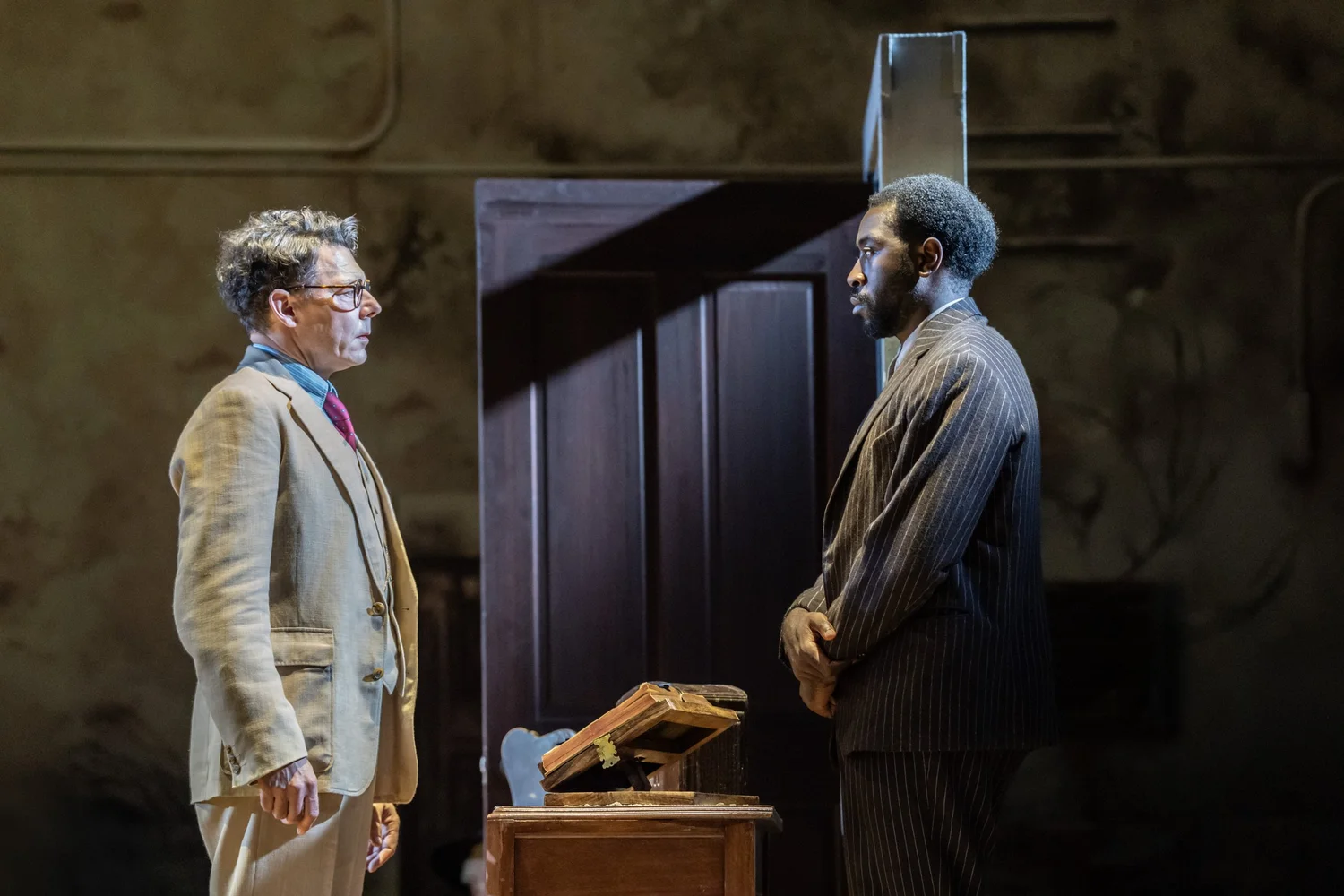
The staging was simple but effective with a constant rotation between Atticus Finch’s home and the courtroom, totally changing the scenery and mood.
Patrick O’Kane was great in this principle role, whilst being more successful than most folk in the town never sought to look down or treat anyone any differently. He quotes ‘You never really understand a person until you consider things from his point of view… Until you climb inside of his skin and walk around in it.’ an ethos he looked to instil into his children despite what experiences they encountered or ill will against them. Finch’s morality and ethics never in question until the end of the play where circumstances mean he had to question these himself. An irony I found, only when seeking the benefit of one’s self. O’Kane was believable and passionate. Also not immune from the prejudice he tried to stay away from, one moment in the play with his maid Calpurnia (Andrea Davey) of whom he treated more as a family member than worker when he deemed ‘she should be thankful’ of his representation of his client, showed too that even inadvertently not exempt himself.

At the heart of this play is a serious subject of racism, pre conception and respect. The subject matter also that forms the court case is heavy. Alongside this the language used is also representative of the time and so please be ready to hear some racial terms used.
However the three children in this play shone. Gabriel Scott as Jem Finch, Dylan Malyn as Dill Harris and Anna Munden as Scout Finch narrate throughout, they help bring humour and a lightening of the mood when in scene. This I think, represents their naivety in the world and attempts to understand the adult world and actions of which they are learning about. Their relationship was real and believable. Maylan especially brought laughter in a character that maybe thinks quite differently to the average. Scott’s Gem reactive and impatient to seek response or retort, while Mundens Scout was always questioning the whys. They kicked off this play with questions leading us to look back on the preceding events to that moment.

Stephen Boxer as Judge Taylor showed in a town of preconception and prejudice that fairness and a fair representation were needed to best serve the alleged perpetrator in Tom Robinson. A role undertaken by Aaron Shosanya. Ever present in court scenes yet a role and character that delivers a huge impact with little stage time.

Oscar Pearce’s Bob Ewell, epitomises the thoughts, anger and attitude of the time. A member of the community that people tolerate maybe than actually like. For all it’s easier to ignore someone’s behaviour than try to step in and involved. Evie Hargreaves’ gives a performance of the plays alleged victim Maya Ewell, a girl that is scared, rejected and uncared for lashing out at her accused.

The outcome of the court case may not surprise some, and the justice reflective of time, but by no means is it justified. A sad outcome that reflects the mood throughout the audience in its silence. In the end does justice prevail? In an ironic sense and maybe well overdue but it also takes Finch to question his own beliefs to accept it.
This play has lasted the generations and been brought to classes to study for the reason that it remains relevant. We still live in a world of morality, preconception and pre judgement While the times have changed they now display in different forms.
If you have the chance to catch this production at the Newcastle Theatre Royal this week I very much encourage you too.
Discover more from InNewcastle.co.uk
Subscribe to get the latest posts sent to your email.